
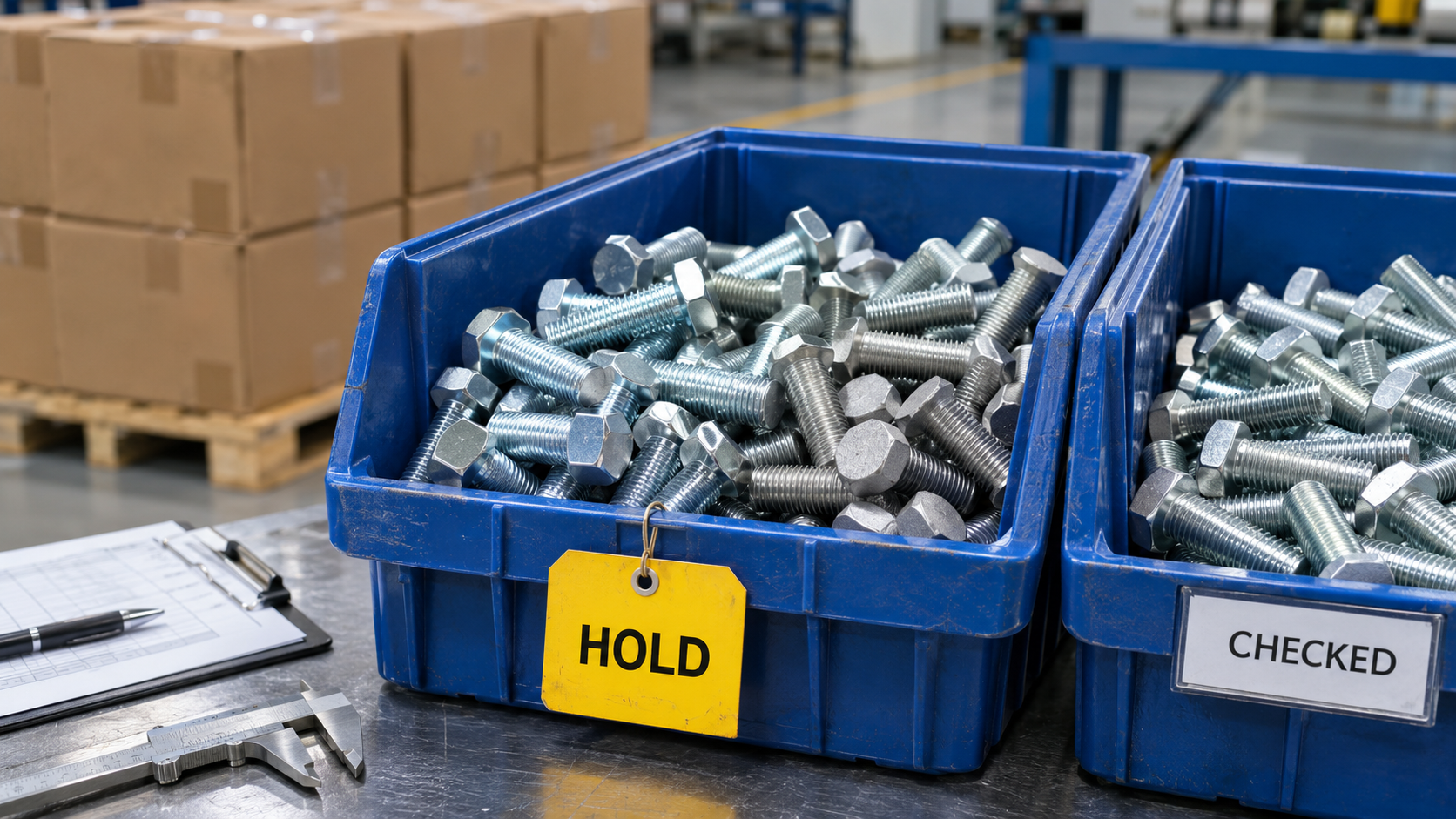
A packing operator finds two similar fasteners in a bin that should contain one part number. The difference is small: a shorter length, a different shoulder, or another feature that is easy to miss during handling.
Now the team has questions. Which parts belong in the order? Has material from that bin already been packed? Are other containers affected?
The shipment may need to wait while those questions are answered. A controlled sorting process helps establish what can be accepted, what needs to stay on hold, and how to keep the material separated through the next handoff.
Contain the material before the mix spreads
Identify and hold the suspect material under your quality procedure. Mark its status clearly so it doesn’t accidentally return to production or get packed into an order.
Use lot records, container labels, job history, and material movements to determine what may be affected. If the bin has already supplied other workstations or cartons, include those in the review.
Keep the original identification with the material. Combining suspect containers can make it harder to trace the problem and determine which parts need attention.
Define a check that can tell the parts apart
“Remove the wrong ones” leaves too much room for interpretation. A sorting instruction should identify the required part, the feature being checked, the acceptance criteria, and what to do when the result is uncertain.
Depending on the difference, the check might use a dimensional gauge, a fixture, a documented visual comparison, or a validated vision inspection. Before sorting begins, confirm that the method can distinguish the relevant conditions using identified examples.
Every check has limits. A length measurement cannot establish material grade or hardness. If two lots look identical but require separate traceability, sorting by appearance cannot restore missing lot identity. Those cases need a decision from the responsible quality team.
Keep checked and unchecked parts separate
Give material a clear path through the work area. Use separately identified locations for parts waiting to be inspected, accepted parts, rejected parts, and those requiring further review.
Avoid putting checked parts back into the incoming container. Clear the station between part numbers or lots, and make sure leftover parts, labels, and packaging cannot carry into the next job.
If work stops for a break or shift change, make the status clear enough for the next person to continue without guessing.
Check the handoff before releasing the order
Record the source material, sorting criteria, results, and required disposition. Account for the quantities in each category and investigate unexplained differences.
Before release, check that accepted parts are packed under the correct part number and lot identification, with the required labels and records. Follow your quality procedure and any applicable customer requirements.
Prevent the next mix-up
Once the immediate material is controlled, look at where the mix occurred. Similar containers stored together, an old label left in place, or new material poured into a partially filled bin are all worth investigating.
The right prevention step depends on the cause. It might be dedicated containers, clearer staging locations, a container-empty check, or identity verification before material moves to the next operation.
At SSI, we help manufacturers work through sorting, inspection, and pack-out requirements based on the actual parts and acceptance criteria. Contact SSI to discuss your sorting needs.