Food & beverage · An SSI proof of concept

Vision Inspection for Dairy Packaging

Understanding what the camera sees is the first step toward a reliable inspection.

SSI developed a vision-inspection proof of concept for a dairy manufacturer using customer-supplied plastic bottle samples. Bench tests and separate conveyor and motorized-rotation demonstrations explored how presentation, camera position, surface conditions and training images affected inspection responses.

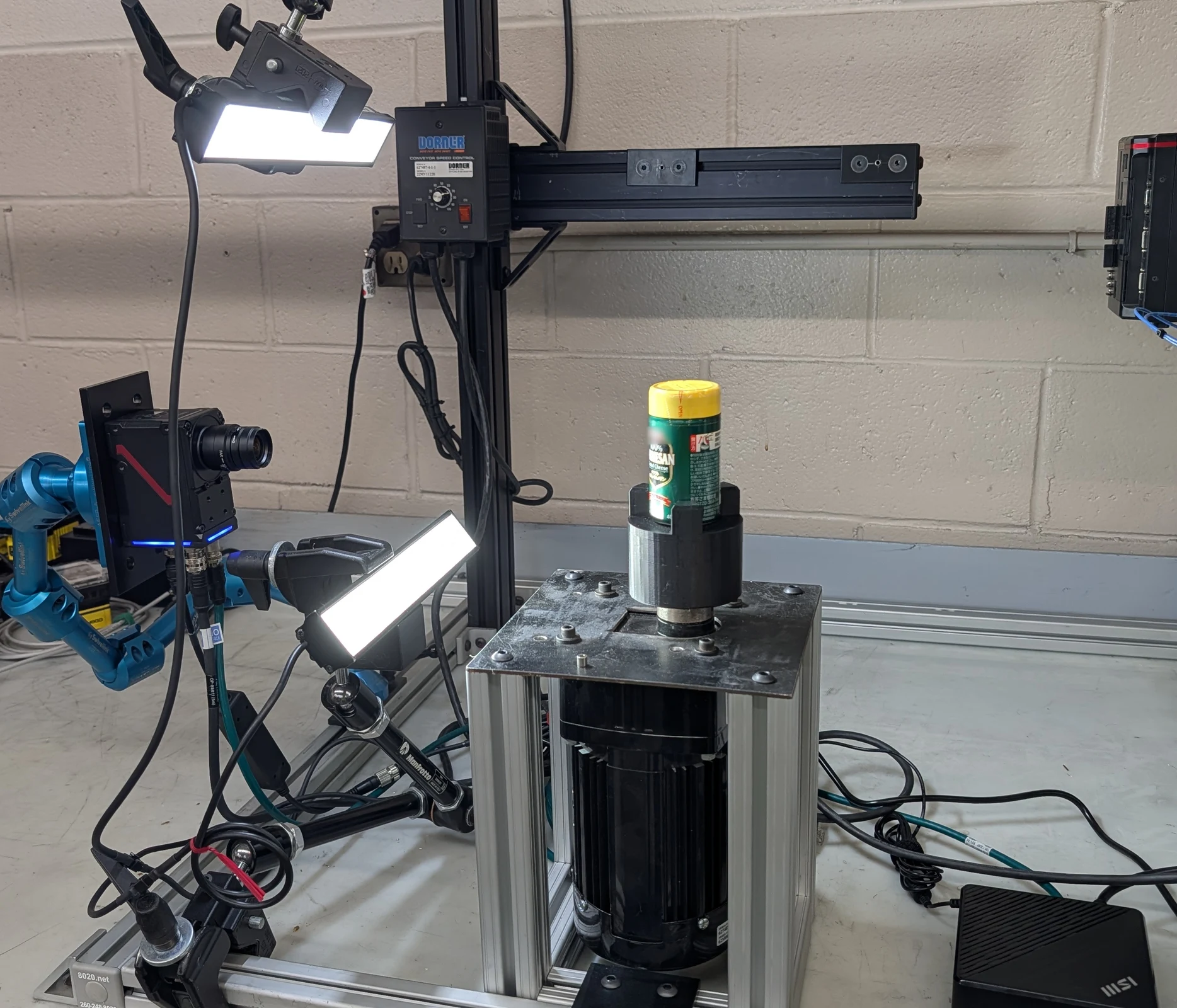
Bottle sample in an operator-controlled rotation holder beside the inspection camera and lights
Motorized rotation demonstration with a bottle sample, inspection camera and illumination.
Industry
Dairy manufacturing
Focus
Plastic bottle inspection
Stage
Proof of concept

The challenge

Defects depend on the view

The sample set included damaged caps and large cap cracks, missing or partial labels, missing code and barcode features, and bottle-shape deformities. A fixed camera inspects the surface presented to it, making viewing geometry and sample orientation central to the tests.

The team refined camera placement and training examples as testing progressed. Water spray simulated mist, and additional good and bad wet images were added to the training set. These were selected-sample tests under simulated conditions.

The approach

Two setups. Different inspection questions.

The demonstrations explored two ways of presenting a bottle to the camera. Each setup provides a different view of the inspection problem.

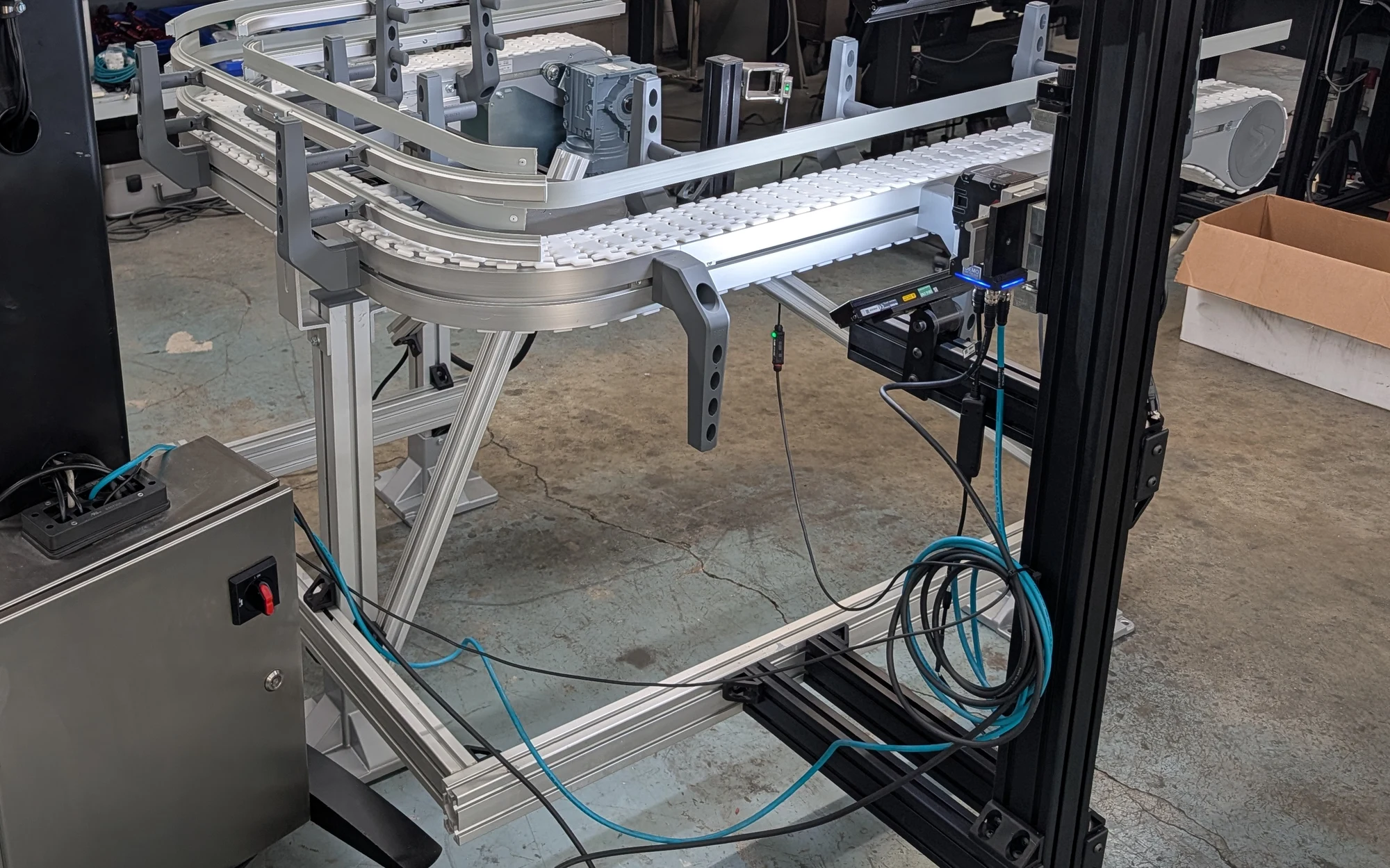
Single-camera conveyor demonstration station

01 · Conveyor demonstration

Presenting a selected defect

Bottles were hand-placed with defects facing one fixed camera. Passing samples triggered images and live pass/fail indications. Representative recorded frames showed a selected defective sample as Fail and a good sample as Pass.

Sample orientation was manual. The demonstration does not establish full-circumference inspection.

Operator-controlled motorized bottle rotation holder and camera

02 · Rotation demonstration

Observing changing surfaces

An operator-controlled holder rotated a bottle while the system acquired timed images. A defective sample alternated between Fail and Pass as different surfaces faced the camera.

Complete-bottle decisions and automated reject logic remain unverified.

From the test bench

See the rotation demonstration

This 8.8-second excerpt shows the actual motorized-rotation apparatus and recorded inspection responses. Source order and speed are preserved.

The footage documents a selected-sample demonstration, not measured production performance.

Edited excerpts from a recorded rotation demonstration. Customer names blurred; audio removed. Displayed Pass/Fail responses apply to individual camera frames. Rates and scores are interface values from this sample run, not validated accuracy or completed-bottle throughput.
Visual description

The first segment shows a bottle in an operator-controlled motorized holder, with a fixed camera and lights facing it. Customer names are softly blurred while the bottle artwork and apparatus remain visible. The second segment shows the recorded inspection display with changing frame responses; customer names are blurred and recorded Pass/Fail responses remain visible. The clip is silent. A 150 ms trigger cycle shown on the interface is image-acquisition cadence, not completed-bottle throughput.

What we learned

A foundation for further validation

The proof of concept documented inspection responses to selected defects and demonstrated the importance of bottle presentation, camera position, surface conditions and representative training examples.

Further validation would need to establish defect-size limits, repeatability, false decisions and complete-bottle handling at the required line rate.

Scope of this case study

This work was a proof of concept. Production deployment, achieved accuracy, ROI and measured throughput are not established by these demonstrations.