01 · Extra component
Three screws, with two required
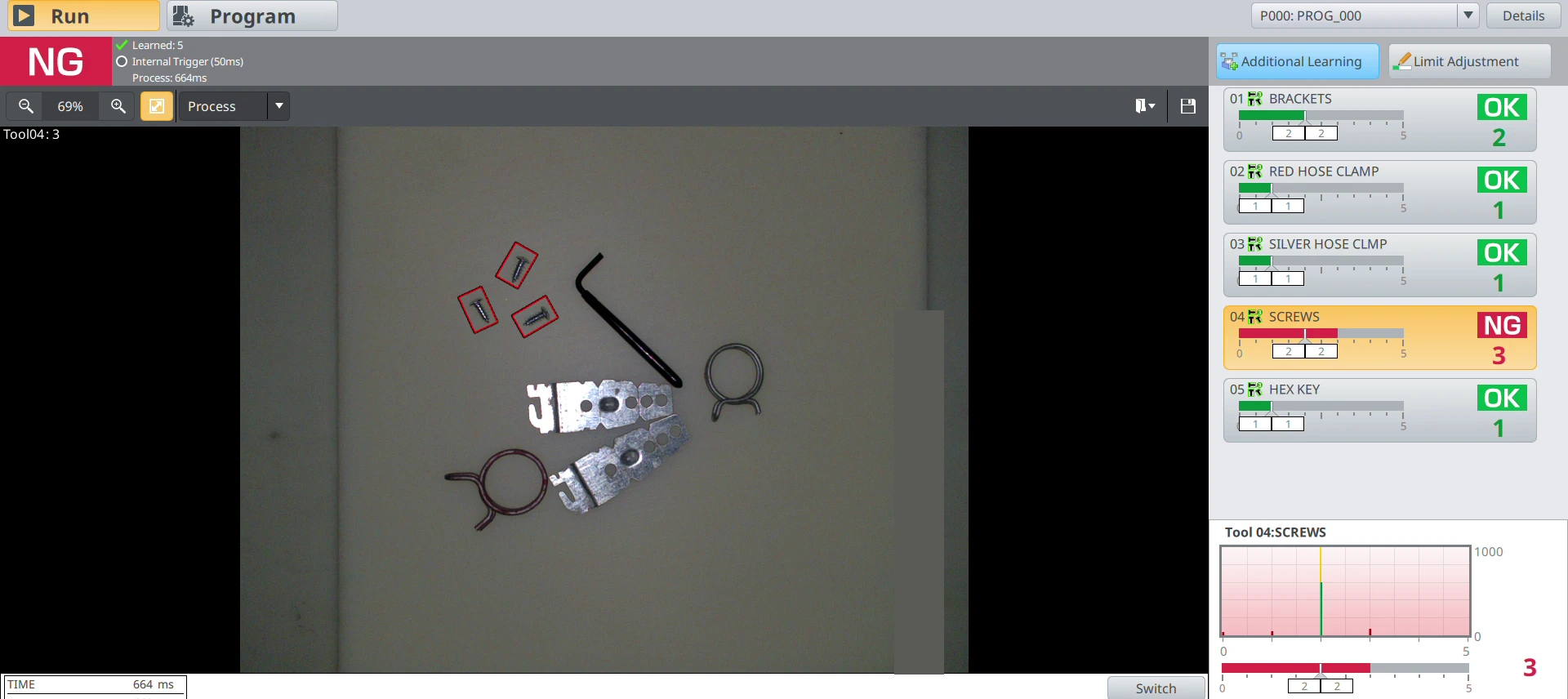
The extra-screw example contained three screws against a required count of two. The recorded display returned NG.
Open full-size extra-screw capture
Assembly & packaging · Application testing
Checking kit contents starts with a clear view of every component.
SSI application testing explored component counting and color checks across five kit SKUs. In one recorded demonstration, an extra screw and a missing hex key each produced an NG indication, while a complete kit produced OK with displayed component counts.
The challenge
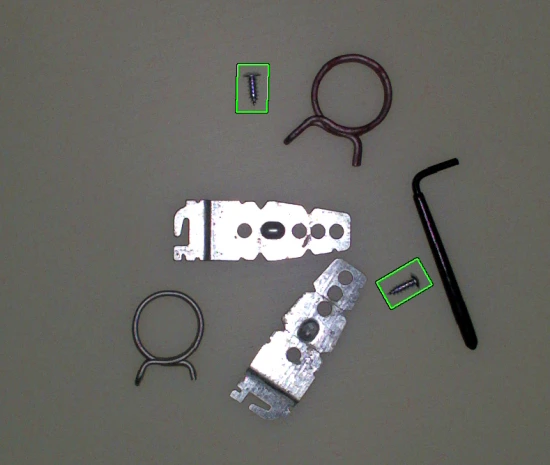
Kit verification involves more than finding one feature. The inspection must evaluate the expected mix of components and quantities for the selected kit.
The application tests explored component counting and color checks. A polarizer helped manage reflections from washers during testing.
The documented test method requires components to be presented without overlap. Performance with overlapping parts was not established.
Recorded examples
The recorded example shows how the displayed inspection result responds to selected kit contents. These observations apply to this demonstration.
01 · Extra component
The extra-screw example contained three screws against a required count of two. The recorded display returned NG.
Open full-size extra-screw capture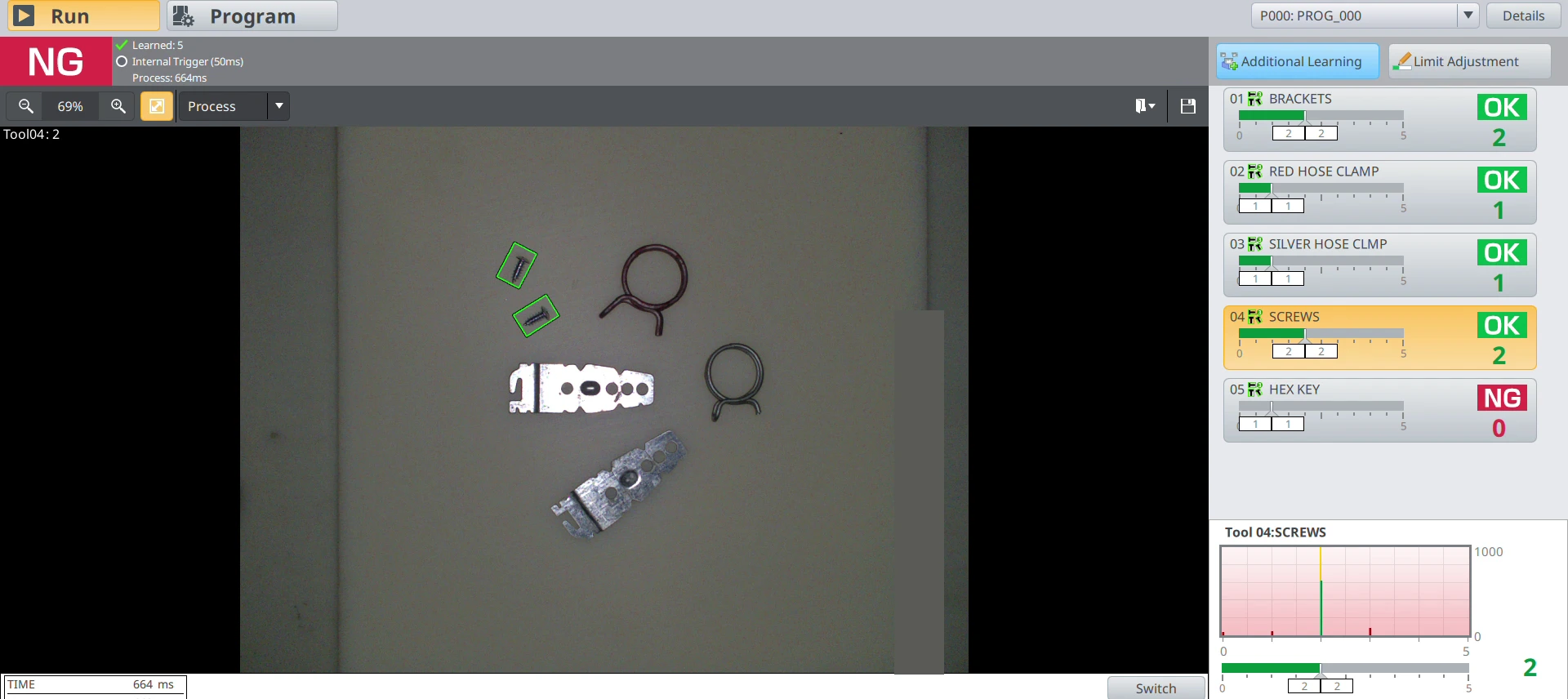
02 · Missing component
The missing-hex-key example also returned NG in the recorded demonstration.
Open full-size missing-hex-key capture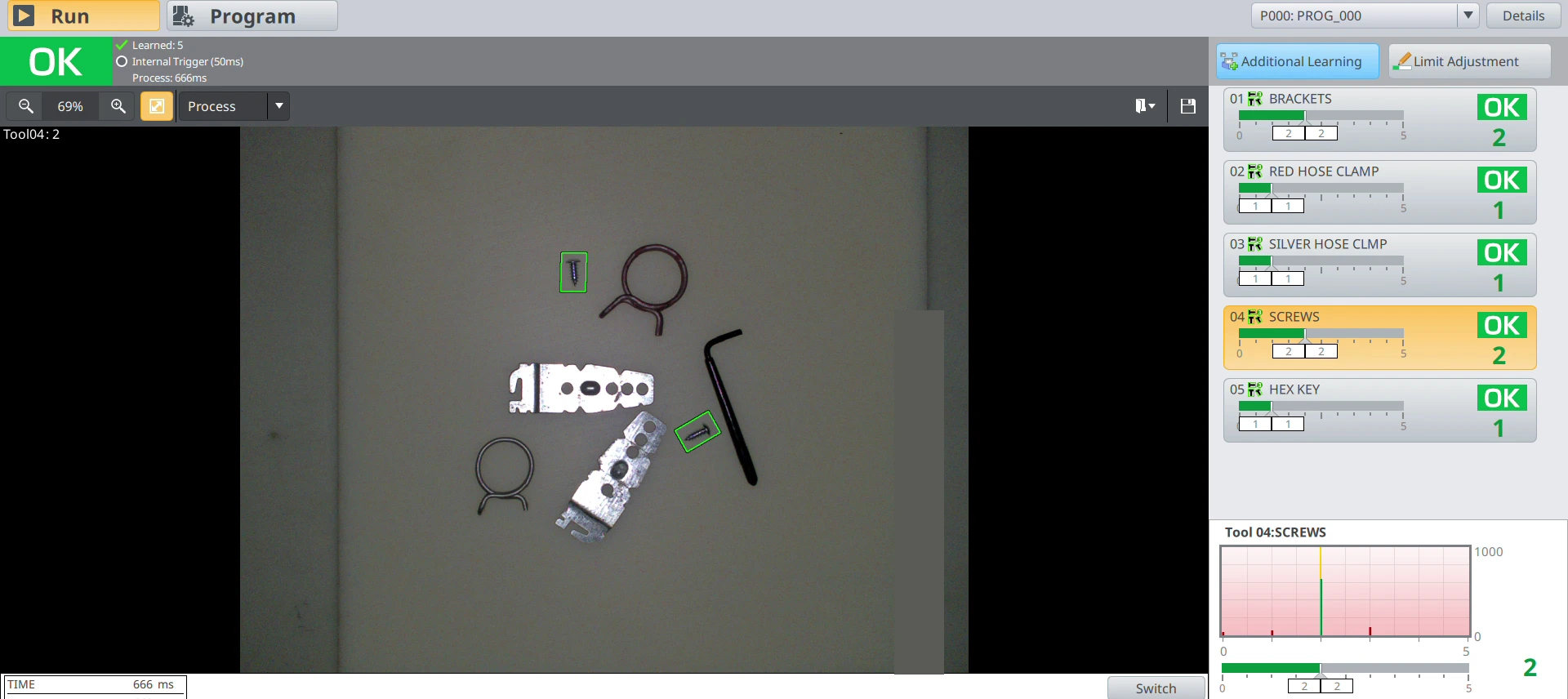
03 · Complete kit
The complete-kit example returned OK with the component counts shown on the inspection display. OK refers to the configured component checks in this test.
Open full-size complete-kit captureFrom the application test
This silent, nine-second edit uses three excerpts from the actual demonstration: an extra screw, a missing hex key and a complete kit. Source order and speed are preserved.
Displayed results are observations from the selected test sequence, not a validated production accuracy or throughput measure.
The inspection display checks two brackets, one red hose clamp, one silver hose clamp, two screws and one hex key, showing counts and an overall OK or NG indication. The sequence includes three screws where two are required, a missing hex key, and a complete kit. Parts must remain separated without overlap for the documented method.
What we learned
The application tests illustrate component-count and color-check methods for the reported kits. The selected demonstration documents responses to missing, extra and complete-kit conditions.
Further validation would need representative samples, controlled part presentation and agreed acceptance criteria before establishing production performance.
This story describes application testing. Components must not overlap. Production accuracy, savings, throughput and deployment are not established by the report or demonstration.