
A conveyor goes down. The photoeye that failed is available from a local distributor. The custom guide block on the same conveyor is a different story: there’s no drawing on file, the only sample is worn, and no one has confirmed which dimensions matter. Two parts on the same machine can have very different recovery times.
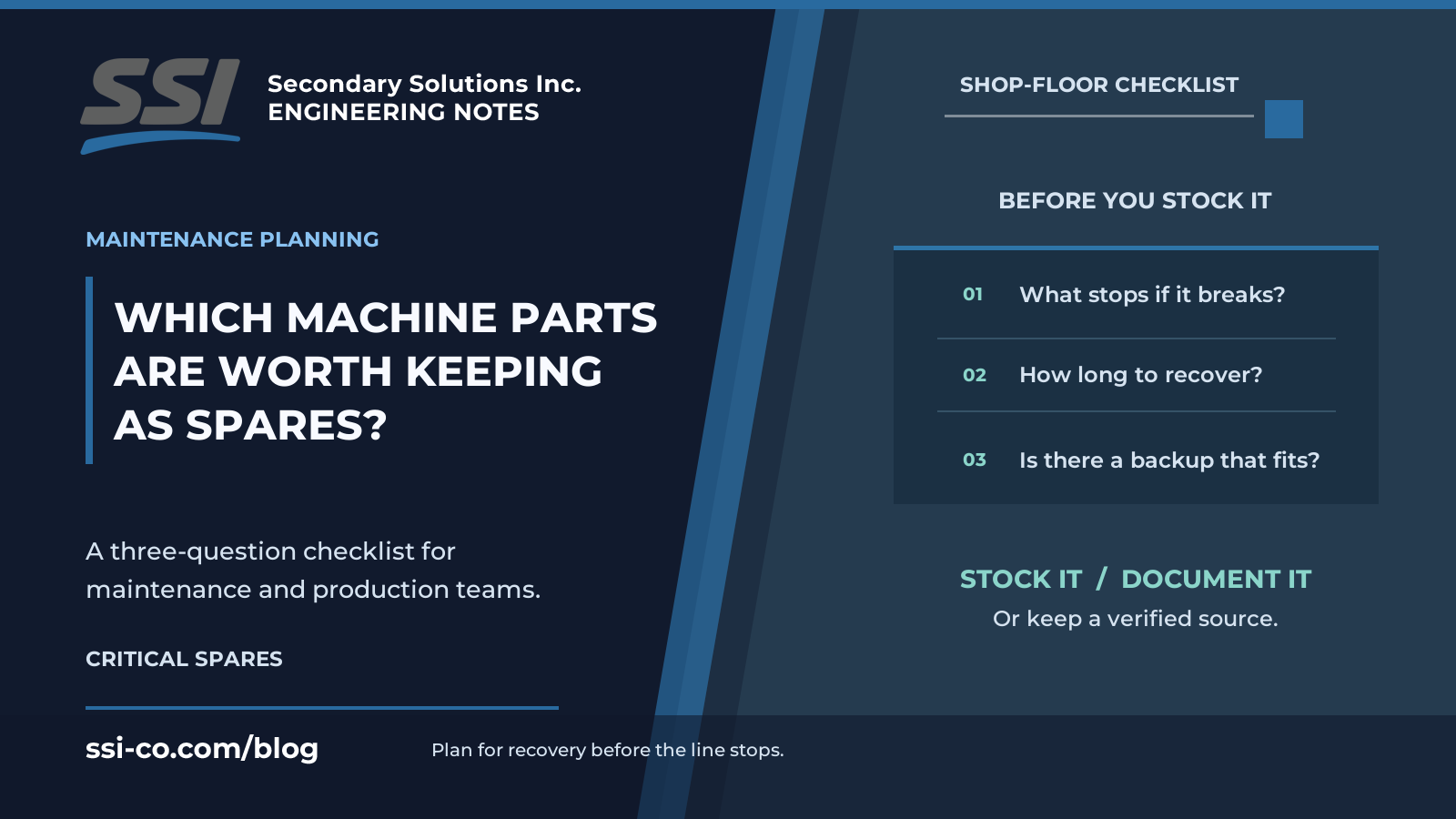
Before adding another item to the storeroom, ask three questions.
1. What stops if it breaks?
Start with the effect on production. Can another machine run the job? Can the affected station keep up at a reduced rate using an approved process? Or does the whole line wait for that part? A small guide, stop or locator can be as consequential as a much more expensive component if nothing downstream can run without it.
2. How long would it take to get back up and running?
Supplier lead time is only part of the answer. Count the time to identify the correct revision, source or make it, install it and verify that it works. For a custom guide block, that may mean checking mounting holes, the part it mates with and the clearance it needs. Measuring the worn surface alone may give you a copy of the problem.
3. Is there a backup that actually fits?
Check whether a stocked spare or alternate works on that specific machine and revision. A part that looks right on the shelf may have a different mounting pattern, material or fit. Record where it’s stored and how compatibility was verified, so the next shift doesn’t have to start over.
Stock it, document it, or keep a source
- Stock a spare when the failure stops critical production and sourcing or making a replacement would take longer than the operation can tolerate.
- Document the part now when it’s custom and can be made on demand, but nobody has an approved drawing. Record the mounting points, mating features and requirements that determine fit. If it would still take too long to reproduce, consider stocking one too.
- Keep a verified source when the correct part or approved alternate is readily available and the recovery time is acceptable. Record the exact part number, revision, supplier and when availability was last checked.
Start with one machine that can hold up a shipment. Walk through the parts that could stop it and see which ones lack a confirmed spare or a plan to get one. That short list is a better place to start than the entire machine’s parts list.
If you have a custom replacement part and only a worn sample to work from, send SSI the sample, any available drawings, and details about how it fits. That gives us a starting point for reviewing what can be reproduced and what needs to be verified first.