
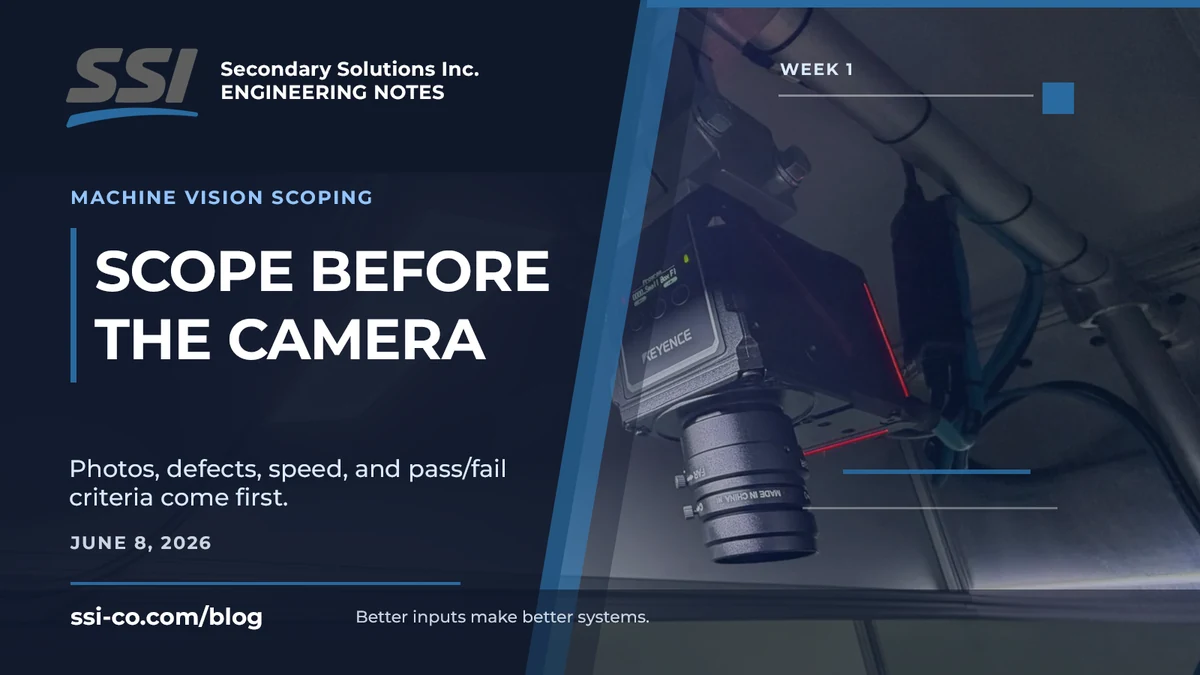
A better inspection conversation starts with the real production details: product photos, known defects, pass/fail criteria, line speed, product handling, and what needs to happen when a part fails.
A vision inspection project usually starts before anyone picks a camera. The most useful first step is defining what the system needs to decide, what the product looks like in the real process, and what should happen when the result is not acceptable.
That early context changes the conversation. Instead of guessing at hardware from a short description, SSI can look at the part, the known defect modes, the required views, the expected line speed, and the integration points around the inspection station.
Useful inputs include clear product photos, examples of acceptable and rejected parts, pass/fail criteria, throughput targets, product spacing, part orientation, lighting constraints, and any existing barcode, PLC, HMI, database, or reject-handling requirements. Short line videos are often helpful because they show how the product actually presents itself in motion.
The pass/fail decision is especially important. A system designed around "find bad parts" is too vague. A system designed around measurable conditions, readable codes, visible features, missing components, wrong labels, orientation, count, or surface defects is much easier to scope, test, and support.
The output side matters too. Some applications need an alarm or line stop. Others need a reject signal, a diverter, image capture, CSV logging, database records, or operator feedback on an HMI. Those choices affect the system architecture just as much as the camera and lens.
If you are evaluating a new inspection point, send the practical details first. SSI can help turn the product, defect examples, speed, and acceptance criteria into a supportable inspection approach.