
A product changeover is complete. A camera has been repositioned, a guide adjusted, or a component replaced during maintenance. The line is ready to move again. Before production restarts, what evidence shows that the inspection still makes the required decisions?
A useful recheck connects the change to the conditions the inspection depends on, then tests the affected checks and their line response. Its scope belongs in the machine and quality procedures so the next shift can follow the same process.
Decide which changes call for a recheck
Include changes that can affect the inspection image, the acceptance rules, or what happens to the inspected part. Examples include a different product or job, camera or light movement, a focus adjustment, a fixture change, and work on the trigger or reject equipment. A speed or spacing change may also affect the path from inspection to response.
An unexpected result after a restart is another reason to pause and review the setup. The earlier What Changed article covers diagnosis after a problem appears. A restart recheck establishes evidence before releasing the changed setup to production.
Confirm the physical setup and selected job
Compare the station with its approved setup reference. Check the relevant camera and light positions, part presentation, guides, and trigger location. Confirm the selected inspection job and the product-specific acceptance settings. A familiar-looking screen does not establish that the correct job is loaded.
For dimensional measurements, review whether the change affects calibration. Cognex's In-Sight calibration guidance explains that the sensor, lens, and physical relationship to the scene must match the calibrated setup. Follow the requirements for the actual system rather than assuming that selecting the old job restores valid measurements.
Test the conditions the inspection must distinguish
Use identified known-good samples and known-defect samples tied to the required checks. Define the expected result before testing. One obvious defect cannot demonstrate every inspection function, and repeatedly passing one good sample leaves the reject decision untested.
Run the samples through the actual inspection path under the approved test procedure, with the relevant presentation, operating speed, and spacing. A saved-image test can help check inspection logic, but it does not exercise today's physical setup or prove that the right product reaches the reject point.
Keep challenge parts identified and contained so they cannot mix with saleable product. Follow machine guarding and safe operating procedures. The approved validation plan should set the sample coverage and repeat count; there is no universal number that proves every application ready.
Verify the response and record the release
Observe both the inspection result and the action required for that result. Where the application calls for a reject, verify that the intended part is handled correctly. Where it calls for a hold, alarm, or stop, check that response and the approved recovery procedure.
Record the reason for the recheck, the job or revision, the samples used, expected and observed results, and any corrections. Identify who is authorized to release the setup. If a test fails, resolve the cause and repeat the relevant checks before release.
A quick restart checklist
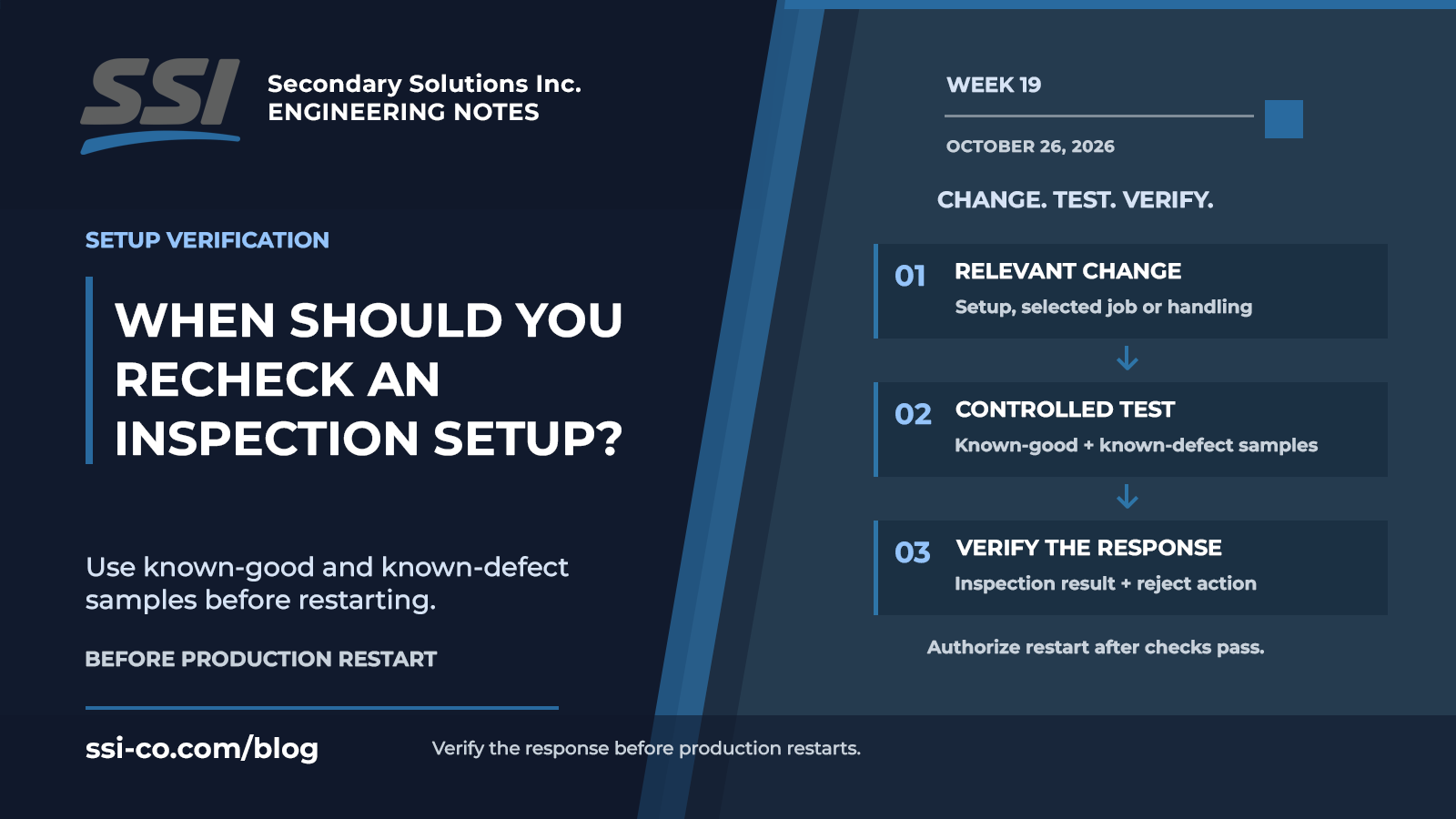
- Identify what changed and which checks it could affect.
- Confirm the physical setup, selected job, and applicable calibration.
- Test controlled known-good and known-defect samples through the actual path.
- Verify the required line response and account for all test parts.
- Record the results and obtain the required restart authorization.
Talk with SSI about your inspection application, including the changes operators make between runs and the evidence they need before restarting production.