
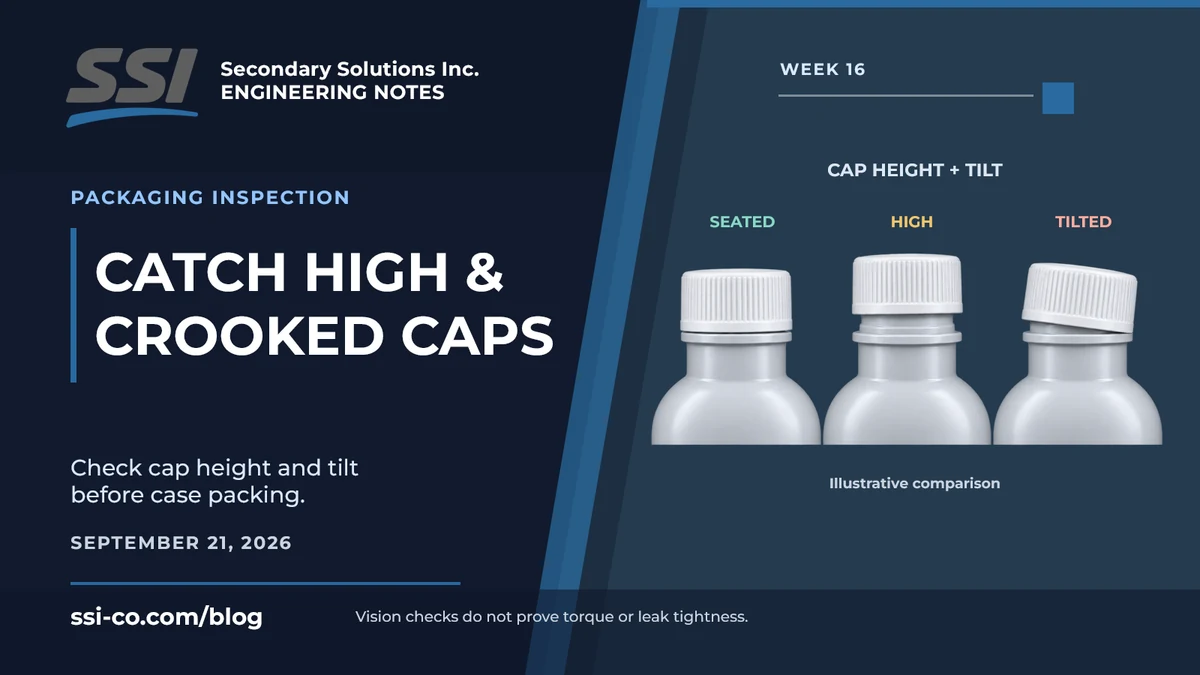
A cap sitting high on a bottle or tilted across the neck is a visible reason to question the closure. Once that bottle is inside a packed case, the same issue is harder to see and may require opening packaging to investigate.
Machine vision can screen for defined cap-position problems while the closure is still exposed. The useful question is specific: does this cap's visible height and alignment meet the approved requirements for this container?
High and tilted are different conditions
Imagine three bottles from the same product run. In this hypothetical example, the first cap matches the approved position. The second sits higher than allowed but remains level. The third has one side raised, creating a visible tilt. Both suspect caps are present, but their geometry differs from the accepted condition.
A height check compares a selected cap edge or surface with a suitable reference on the container. A tilt check evaluates alignment relative to the container. These measurements address different faults; one acceptable height measurement does not automatically establish that the cap is level.
Measure against the bottle rather than the image border
Suppose a correctly capped bottle arrives slightly higher in the camera image. Measuring the cap only against a fixed screen position could confuse that movement with a high cap. A useful measurement references an appropriate bottle feature so it evaluates the cap-to-container relationship.
That reference must be visible and repeatable. For example, a suitable neck feature may help establish the relative height, depending on the package design. A sloped shoulder, decorative feature, or obscured edge may be unsuitable. The inspection should establish what is being measured before attaching an acceptance limit to the number.
How SSI can address the visible check
SSI's Vision Tunnel includes cap and alignment checks among its listed applications. Its camera and lighting arrangement is configured around the selected package faces, visible features, and line conditions. Cap-height and tilt requirements need application-specific confirmation with representative containers.
The evaluation should include accepted closures, high caps, and tilted caps, as well as normal variation in the container and closure. A nominal sample alone cannot show whether the check separates the actual failure from acceptable production variation.
Where configured, distinct high-cap and tilt results can also help a quality team describe what it is seeing. Those results can guide an investigation, but they do not by themselves identify which capping-machine adjustment caused the condition.
A visual check does not prove a tight seal
Cap position is visible evidence, not a direct measurement of applied torque or leak tightness. A cap can look correctly positioned while another closure requirement remains unverified. Torque, leak, and hidden seal requirements need the appropriate separate process controls or tests.
The aim is to screen visible closure faults before they disappear into secondary packaging, while keeping the meaning of a pass clear. Talk with SSI about the cap conditions your line needs to detect, including what an accepted closure looks like and how the suspect examples differ.