
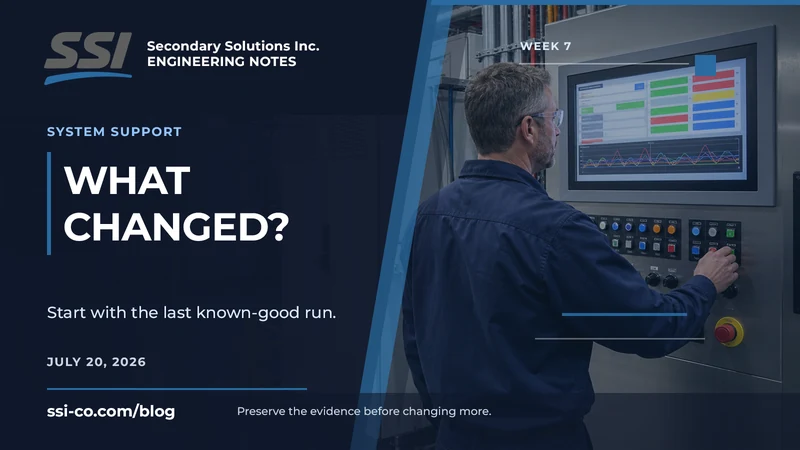
Automation Troubleshooting Starts With One Question: What Changed?
When an automated system starts behaving differently, the fastest route to the cause often begins with a disciplined comparison: what changed since the last known-good run?

Field-ready lessons from engineering, integration, and support teams. Browse practical articles on validation, implementation, and supportable production systems.
Showing 9 of 19 posts.
When an automated system starts behaving differently, the fastest route to the cause often begins with a disciplined comparison: what changed since the last known-good run?
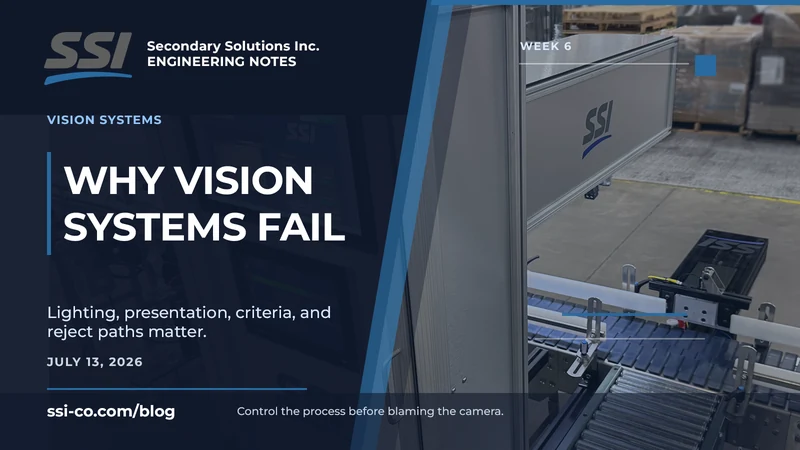
Vision systems rarely fail because a camera exists on the line. They fail when the inspection zone, sample set, pass/fail criteria, or response to failure was never controlled clearly enough.
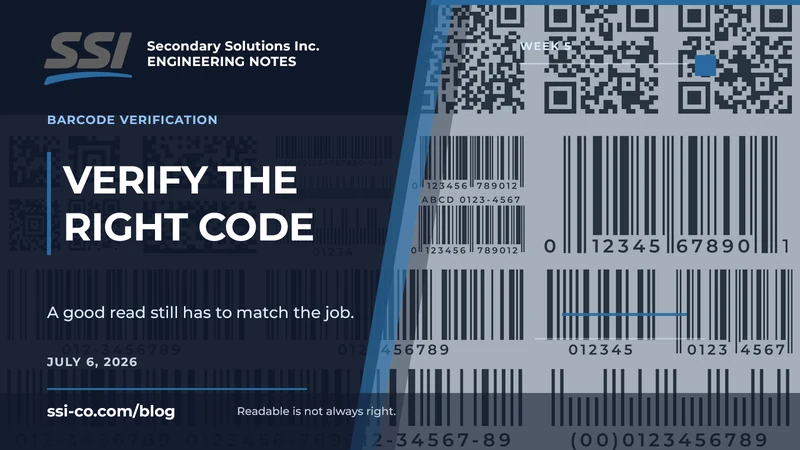
A barcode that scans is only the first checkpoint. The stronger question is whether the code matches the job, lot, order, or expected product in that moment.
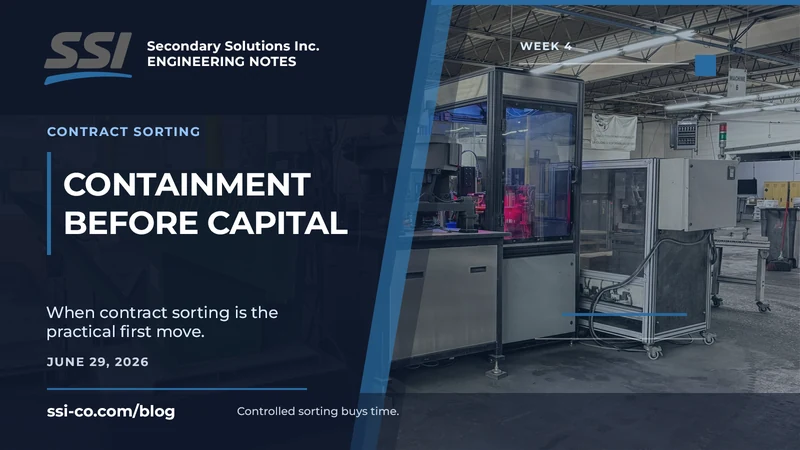
A short SSI video shows automated sorting in action and why decision rules, pass/fail criteria, quantities, packaging, labels, and traceability needs should be clear before work starts.
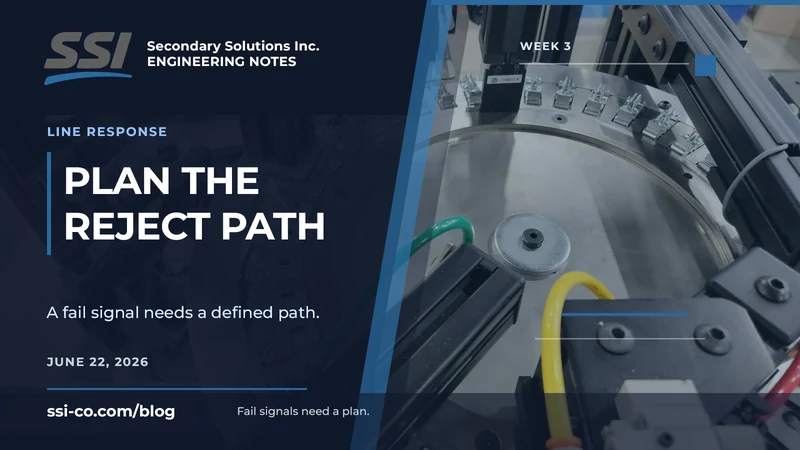
A pass/fail result only creates value when the line has a controlled response. Reject handling, operator feedback, alarms, stops, logging, and handoff rules should be part of the inspection scope.
Sometimes the fastest practical answer is not a new machine. It is a controlled sorting, verification, or pack-out process with clear criteria and organized handoff.
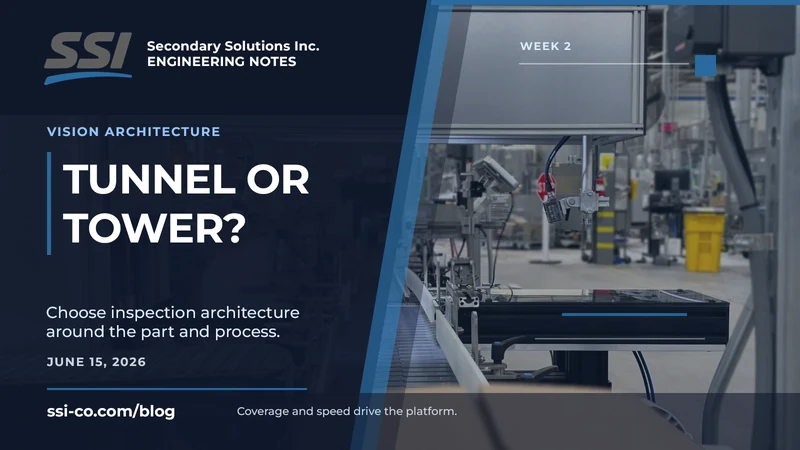
Tunnel or tower is not a style choice. The better architecture depends on inspection coverage, product presentation, line speed, access, and what needs to...
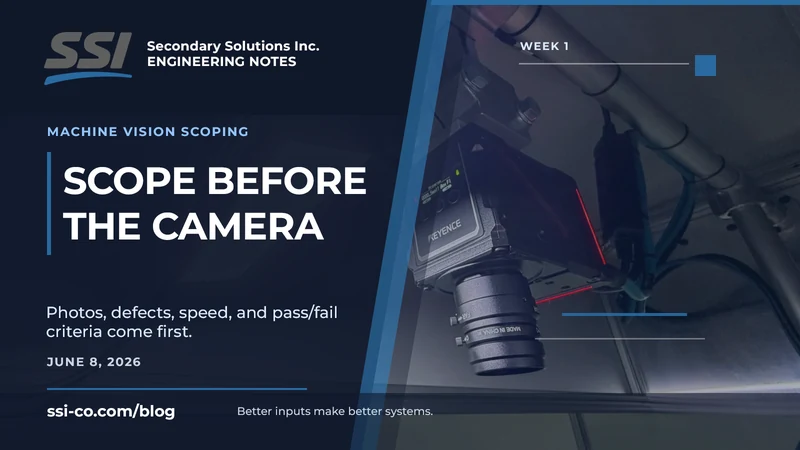
Help SSI scope a vision inspection with product photos, defect samples, pass/fail criteria, line-rate targets, handling details and the required failure response.
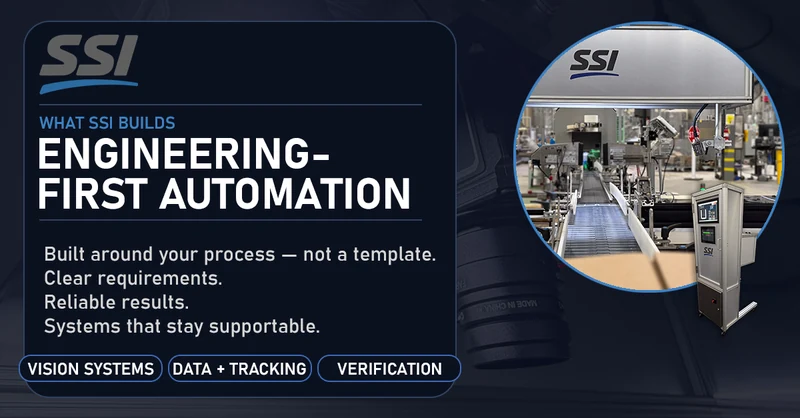
Engineering-First Automation: What SSI Builds At Secondary Solutions Inc, we build practical vision and workflow verification systems for real factory...
Receive concise SSI notes on inspection, workflow verification, and supportable production systems.